10 Best Skeleton Loaders In JavaScript And Pure CSS (2026 Update)
Skeleton loaders keep cards, lists, images, forms, and other content from turning into blank space while data is loading. The best option depends on how closely the placeholder needs to match the final layout and how much control you want over its structure, animation, and loading state.
This roundup includes 10 open-source skeleton loaders for Vanilla JavaScript, jQuery, Web Components, and pure CSS. They range from lightweight CSS placeholders to libraries that work with existing HTML or tie the loading state directly to AJAX content.
If you are looking for a skeleton loader that matches your UI and development stack, keep reading to see which options are best suited to different loading scenarios.
Originally Published Mar 27 2024, updated Sep 14 2026
Quick Comparison of the Best Skeleton Loaders
| Library | Type | Best For |
|---|---|---|
| phantom-ui | Web Component | Automatic placeholders from an existing layout |
| SkeletonJS | Vanilla JavaScript | Turning existing HTML into skeleton content |
| Placeholder Loading | Pure CSS | Cards, feeds, text rows, and avatars |
| Skeleton Mammoth | Pure CSS | Mixed UI elements with configurable loading states |
| Godfather.js | jQuery | AJAX-loaded HTML components with template data |
| Skeleton Screen CSS | Pure CSS | Hand-built layouts from reusable placeholder shapes |
| css-skeletons.css | Pure CSS | Charts, cards, lists, profiles, images, and media |
| jQuery Skeleton Loader | jQuery | External page fragments loaded through AJAX |
| Animated Skeleton Loader | Vanilla JavaScript | Generated line and avatar placeholder groups |
| avnSkeleton | jQuery | Legacy jQuery layouts with explicit loading control |
The 10 Best Skeleton Loader Libraries
1. Auto-Generated Skeleton Loader Web Component for Any Framework - phantom-ui
phantom-ui reads the rendered layout and generates matching skeleton blocks automatically. It is especially useful for application screens where maintaining a second set of placeholder markup would be tedious.
- Automatic measurement of rendered DOM elements
- Shimmer, pulse, breathe, and solid animations
- Repeated placeholders for lists and rows
- Element grouping and exclusion controls
- CSS custom properties for skeleton colors

2. Convert HTML Elements to Skeleton Loaders with SkeletonJS
SkeletonJS turns selected HTML elements into animated loading placeholders. It works well when the final markup already exists and you want direct control over which parts of the page enter the skeleton state.
- Existing HTML elements as skeleton sources
- Built-in shimmer animation
- Repeated placeholders through
data-skeletons-count - Configurable color, radius, and animation timing
- CSS-only and JavaScript initialization modes

3. Facebook Inspired Skeleton Loader In Pure CSS - Placeholder Loading
Placeholder Loading is a CSS-only system for Facebook-style cards, feeds, profile rows, and text blocks. Its reusable classes make it easy to assemble familiar social and content layouts with no JavaScript dependency.
- Rows, columns, pictures, avatars, and text blocks
ph-*utility classes for layout- Responsive column widths
- Sass variables for colors, spacing, and radius
- Configurable animation duration

4. Highly Customizable Skeleton Loader In Pure CSS - Skeleton Mammoth
Skeleton Mammoth works well for pages that mix text, forms, images, buttons, and cards. The loading state stays CSS-based, but configuration attributes make the appearance easier to adapt than a fixed placeholder stylesheet.
- Text, image, input, button, and card placeholders
m-loadingloading-state class- Light and dark themes
- Wave and pulse animations
data-sm-configfor opacity and border radius

5. Dynamic HTML Loading with Skeleton Loader - jQuery Godfather.js
Godfather.js ties the loading state directly to remote HTML. It suits jQuery applications that fetch reusable fragments from the server and need the skeleton to disappear as soon as the component arrives.
- AJAX loading for external HTML components
- Skeleton state during the request
- Template variables such as
{{username}} - Container-based jQuery initialization
- Direct content injection after loading
6. Animated Skeleton Loading Screens In Pure CSS
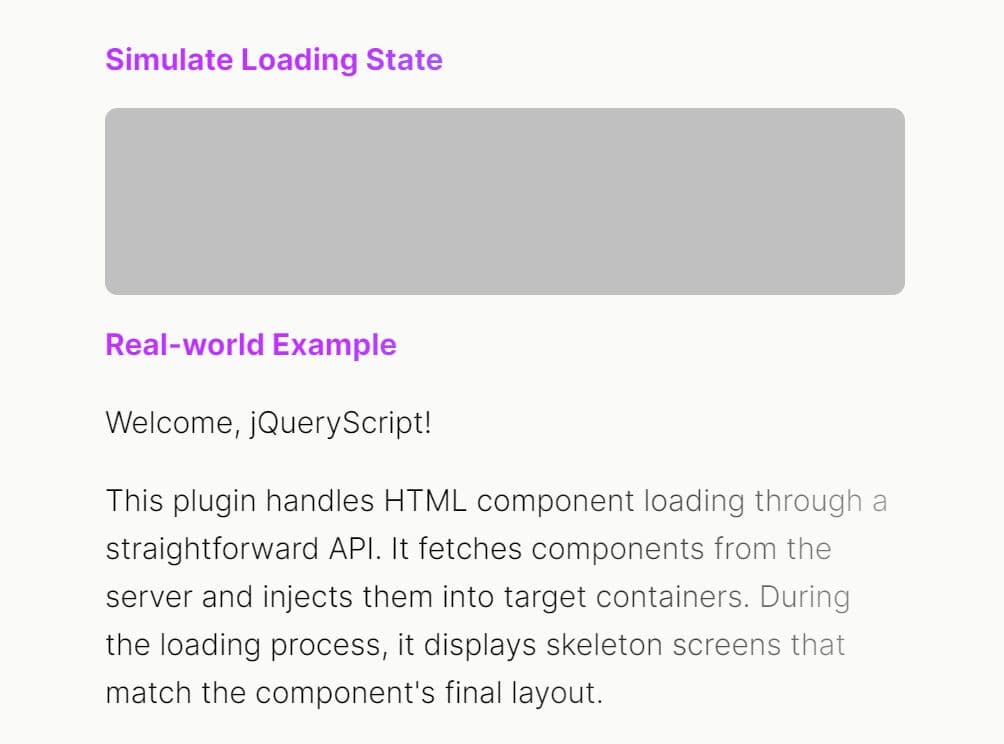
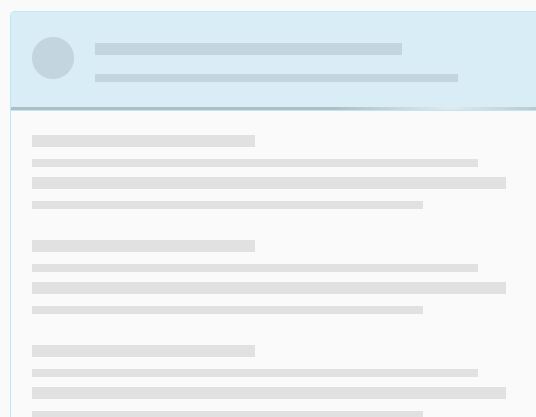
Skeleton Screen CSS supplies a small collection of shapes that you assemble into the placeholder layout yourself. It is a good choice when the loading structure is known in advance and you want a compact CSS-only setup.
- Circle, headline, line, square, divider, and card shapes
- Composable placeholder layouts
- No JavaScript dependency
- Sass variables for colors and spacing
- Configurable radius, dimensions, and animation timing

7. Customizable Screen Skeleton Loader In CSS - css-skeletons.css
css-skeletons.css stands out for the range of preset content shapes it can represent. It is particularly useful for dashboards and media-heavy pages where cards, profiles, charts, lists, and images need different loading layouts.
- Paragraph, card, list, profile, and image presets
- Column and line chart skeletons
- YouTube-style media placeholders
- CSS variables for size, spacing, and colors
- Configurable line count and animation timing

8. Facebook-like Content Placeholder Plugin - jQuery Skeleton Loader
jQuery Skeleton Loader is aimed at AJAX-driven pages that pull in external content. Its request, fragment-loading, caching, and masking controls suit older content-heavy applications.
- External page loading through AJAX
- Selector-based fragment extraction
- Text masking and image replacement
- Local-storage caching
- Query data and completion callback

9. Animated Skeleton Loader In Pure JavaScript
This small Vanilla JavaScript library generates placeholder groups from a Loader instance. It works best for simple avatar-and-text rows, comments, profile summaries, and feed items that only need a few repeatable shapes.
- Round and line placeholders
- Repeated loader groups
- Global and per-item styles
- Container-based rendering
- No dependency on existing content markup

10. Skeleton Loading Screen With jQuery And CSS3 - avnSkeleton
avnSkeleton is a straightforward option for older jQuery layouts that need explicit control over when a skeleton appears and disappears. Its configuration centers on header and main-content placeholders with manual loading-state control.
- Header and main-content skeleton blocks
- Configurable lines, icons, loaders, and paragraphs
- Public
displaymethod - Public
removemethod - Manual integration with existing AJAX workflows
Which Skeleton Loader Should You Choose?
- phantom-ui for automatic placeholders that follow an existing page layout.
- SkeletonJS for converting selected HTML elements into loading states.
- Placeholder Loading or Skeleton Mammoth for CSS-only placeholders.
- css-skeletons.css for dashboards, charts, and media-heavy layouts.
- Godfather.js for server-loaded HTML components in jQuery projects.
- jQuery Skeleton Loader for AJAX page fragments, caching, and content masking.
- avnSkeleton for simpler legacy jQuery loading states.
Related Skeleton Loader Resources
- 15 Best Loading Spinner Plugins In JavaScript And Pure CSS (2026 Update)
- 10 Best Lazy Loading JavaScript and jQuery Plugins (2026 Update)
- JavaScript & CSS Skeleton Loader