Create Performant Falling Particles With The Sparticles Library
| File Size: | 1.55 MB |
|---|---|
| Views Total: | 3748 |
| Last Update: | |
| Publish Date: | |
| Official Website: | Go to website |
| License: | MIT |

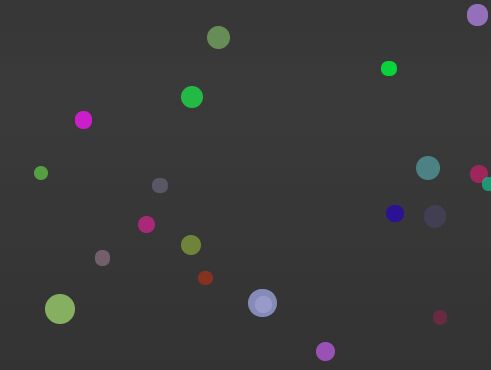
Sparticles.js is a lightweight and performant library for creating falling particles using JavaScript, requestAnimationFrame, and HTML5 canvas.
Compatible with Vanilla JavaScript, jQuery, Svelte.js and ESM. Ideal for creating falling sparkles, snowflakes, stars, and any shapes as the background of your webpage.
Features:
- Supports any type of shaples like circle, square, triangle, diamond, line, image, or random.
- Configurable min/max size, alpha, animation speed, and much more.
- Parallax and Rotate effects.
How to use it:
1. Download and import the Sparticles.js library into your project.
<!-- Vanilla JS -->
<script src="/path/to/dist/sparticles.js"></script>

<!-- jQuery -->
<script src="/path/to/cdn/jquery.slim.min.js"></script>
<script src="/path/to/dist/sparticles.js"></script>
// OR As An ES Module
import Sparticles from "/path/to/dist/sparticles.esm.js";
2. Initialize the Sparticles.js on the targer container where you want to render the particles.
// Vanilla JS
(function() {
  window.onload = function() {
    var $main = document.querySelector("main");
    window.mySparticles = new Sparticles($main);
  }
}());

// jQuery
$(function() {
  var $main = $("main");
  window.mySparticles = new Sparticles($main.get(0));
});

// ESM
new Sparticles( document.querySelector("main"));

// Svelte
let sparticles;
function addSparticles(node) {
  new Sparticles(node);
}
3. Customize the particles by overriding the following options and pass the options object as the second parameter to the Sparticles().
new Sparticles($main,{

    // rate of change in alpha over time
    alphaSpeed: 10,

    // random deviation of alpha change
    alphaVariance: 1,

    // should the particles bounce off edge of canvas
    bounce: false,

    // css color as string, or array of color strings
    color: "random",

    // a custom function for setting the random colors when color="random"
    randomColor: randomHsl,

    // the number of random colors to generate when color is "random"
    randomColorCount: 3,

    // canvas globalCompositeOperation value for particles
    composition: "source-over",

    // number of particles on the canvas simultaneously
    count: 50,

    // default direction of particles in degrees
    direction: 180,

    // the "driftiness" of particles which have a horizontal/vertical direction
    drift: 1,

    // the glow effect size of each particle
    glow: 0,

    // if shape is "image", define an image url (can be data-uri, must be square (1:1 ratio))
    imageUrl: "",

    // maximum alpha value of every particle
    maxAlpha: 1,

    // maximum size of every particle
    maxSize: 10,

    // minimum alpha value of every particle
    minAlpha: 0,

    // minimum size of every particle
    minSize: 1,

    // speed multiplier effect for larger particles (0 = none)
    parallax: 1,

    // can particles rotate
    rotate: true,

    // default rotational speed for every particle
    rotation: 1,

    // shape of particles (any of; circle, square, triangle, diamond, line, image) or "random"
    shape: "circle",

    // default velocity of every particle
    speed: 10,

    // fill style of particles (one of; "fill", "stroke" or "both")
    style: "fill",

    // particles to exhibit an alternative alpha transition as "twinkling"
    twinkle: false,

    // random deviation of particles on x-axis from default direction
    xVariance: 2,

    // random deviation of particles on y-axis from default direction
    yVariance: 2

});
4. Set the width & height of the canvas element.
new Sparticles($main, options, 400, 400);
5. API methods.
// destroy the Sparticles instance and remove event listeners
instance.destroy();

// set the canvas size
instance.setCanvasSize( width, height );

// reset all the particles
instance.resetSparticles();
Changelog:
2026-04-26
- Naming update: spawnFromPoint is now the preferred option name for location-based spawning. spawnFromCenter remains fully supported as a backward-compatible alias. If both are provided, spawnFromPoint takes precedence.
- spawnLocations: Replaced spawnOffset with spawnLocations: [[x,y], ...] for spawnFromCenter mode. Coordinates are now per-axis percentages in 0..100, and particles are assigned to locations in round-robin order by particle index for even distribution. Invalid values fall back to [[50,50]] (center).
- On-canvas spawn safety: In spawnFromCenter mode, if a random spawn point would place a particle off-canvas, Sparticles now immediately re-rolls a new spawn point. If retries fail repeatedly, it falls back to the spawner origin (clamped inside canvas), ensuring particles always start on-canvas.
This awesome jQuery plugin is developed by simeydotm. For more Advanced Usages, please check the demo page or visit the official website.